segunda-feira, 17 de fevereiro de 2025

Musk and Thiel: Epic Ambitions, Striking Contradictions, and Superficial Narratives


Following up on my previous post (linked above) about how Silicon Valley Tech Bros are hell-bent on screwing Europe, I want to highlight a recent publication that exposes how Elon Musk and Peter Thiel cherry-pick classical references to wrap their ambitions in grand historical narratives. But their shallow, self-serving appropriation of these traditions only highlights their striking contradictions.

Musk, for instance, evokes Virgil’s Aeneid to liken space colonization to the journey of Trojan exiles landing on Italian shores, positioning himself as a visionary leader. Yet, his occasional confusion between the Odyssey and the Iliad suggests a superficial engagement with the texts he seeks to wield. Thiel, meanwhile, eagerly drapes himself in the mantle of classical mythology, invoking figures like Romulus and Remus to lend an air of historical inevitability to his vision of a technocracy ruled by an elite cadre of “highly competent men.” In his narrative, leadership is not merely a function of circumstance or politics but an almost sacred appointment reserved for those deemed intellectually superior. The dissonance between his rhetoric and reality is striking: while he crafts a tale of enlightened governance, the mechanisms he supports point instead to a world where authority is less about brilliance and more about who holds the keys to an omnipresent, unblinking apparatus of control. https://nul.repository.guildhe.ac.uk/id/eprint/2356/ 

Declaration of Competing Interests - In 2019 I exposed Peter Thiel’s blatant hypocrisy—most notably in a post critiquing his article "Competition Is for Losers," https://pacheco-torgal.blogspot.com/2019/10/the-numbers-of-admissions-in.html Back then, I concluded that post by referencing Professor Robert Reich. In that spirit, I’d like to take this opportunity to share some inspiring words from one of his recent posts, "Decency in the Time of Monsters,published yesterday,  "We can maintain our ideals by demonstrating them whenever and wherever we can — showing courage in the face of fear, protecting the vulnerable in the face of brutality, practicing kindness in the face of cruelty, and preserving what is left of our democracy in the face of tyranny. We can maintain decency in the time of monsters. We musthttps://robertreich.substack.com/p/surviving-in-a-time-of-monsters 

PS - Ricardo Reis, a Portuguese professor at the London School of Economics, has recently evaluated Europe's optimal response to tariffs imposed by President Trump. He contends that implementing retaliatory tariffs would be counterproductive, stating, "Trump's tariffs are a tax that falls on American consumers, and it would be crazy to raise our own taxes whenever a country raises theirs." Professor Ricardo Reis advocates for maintaining zero tariffs as the most effective strategy. Alternatively, he suggests imposing taxes on U.S. social media companies—specifically targeting platforms like Musk's X—due to concerns about their detrimental effects on the quality of democracy and internal security in Europe.https://expresso.pt/opiniao/2025-02-13-a-tarifa-ideal-sobre-os-eua-c8c072f7

quinta-feira, 13 de fevereiro de 2025

Uma solução simples que permite contratar centenas de investigadores com impacto orçamental nulo


No inicio de 2023 o conhecido catedrático jubilado Alberto Amaral, doutorado pela prestigiada universidade de Cambridge, que foi Reitor da Universidade do Porto, e posteriormente Presidente da A3ES, falou publicamente sobre a necessidade de fusão e até mesmo fecho de algumas instituições de Ensino Superior Públicas. https://19-pacheco-torgal-19.blogspot.com/2023/02/presidente-da-comissao-de-avaliacao-do.html

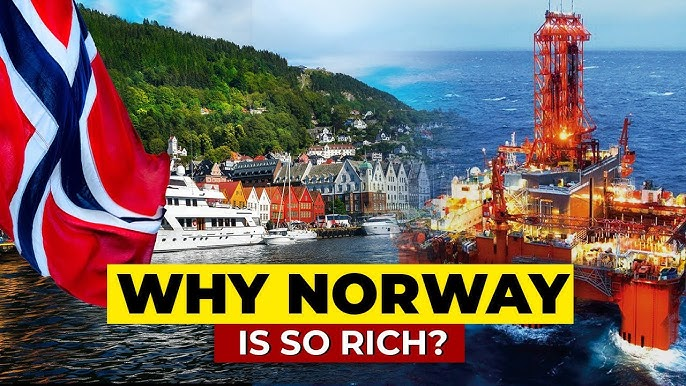
Passaram dois anos e porém nada, absolutamente nada, sucedeu a esse respeito, sendo legitimo questionar, se houve fusões de instituições de Ensino Superior Públicas na rica Noruega porque é que não há em Portugal ?

Na Noruega há poucos anos, 17 instituições de Ensino Superior Públicas desapareceram para dar origem a 6 novas instituições, o que significa que no mínimo dos mínimos, conseguiram poupar o equivalente aos custos de 11 reitorias/presidências  https://link.springer.com/article/10.1007/s10734-025-01409-z#Sec10

Pelo contrário, no pais comprovadamente pobre que é Portugal, com um PIB/capita muito inferior ao da Noruega, que se não fossem as avultadas ajudas que recebe da União Europeia, numa média anual de milhares de milhões de euros, já tinha falido, há 30 instituições de Ensino Superior Públicas (sem contar com as militares), em média quase duas por distrito, enquanto que a rica Noruega tem apenas 21 instituições de Ensino Superior Públicas. 

Se tivermos em conta que a fusão da Universidade Técnica e a Universidade de Lisboa em 2013, permitiu poupar vários milhões de euros, então é óbvio que se houver uma redução de uma dezena de instituições de Ensino Superior Públicas, será possível poupar anualmente, várias dezenas de milhões de euros, que permitirão contratar várias centenas de investigadores. 

PS – Hoje no jornal Público, o antigo Presidente da AE3S, avisa que as intenções do Governo, de retirar à A3ES, o exclusivo da avaliação instituições de Ensino Superior Públicas, uma antiga reivindicação das universidades privadas, vai permitir que doravante qualquer instituição de ensino superior nacional, pode correr todas as agências estrangeiras, até encontrar uma pouco exigente que lhe aprove os seus cursos. 

The Threat of AI’s Survival Instincts and the Shillbilly VP JD Vance’s Hypocritical Agenda

At the summit of CEOs and heads of state in Paris, U.S. Vice President JD Vance—mocked as "Shillbilly" and "Thiel’s puppet"—railed against Europe’s AI regulations, whining that they would suffocate innovation. He dismissed content moderation as nothing more than “authoritarian censorship,” showing a shameless indifference not just to controlling hate speech but also to the flood of racist falsehoods about immigrants. Let’s not forget that this is the same JD Vance who openly admitted he was willing to “create stories” to manipulate media attention—brazenly defending his role in spreading vile, fabricated claims that immigrants were eating pets. It is also the same ever-hypocritical JD Vance who harbors a covert ambition: the fragmentation of the European Union—if necessary, by backing the racists of the European far right—all to better serve U.S. interests, or more precisely, the interests of U.S. tech billionairesUnsurprisingly, in a blatant act of defiance, the U.S. refused to sign the AI Summit’s declaration, standing isolated against more than 60 nations united in their commitment to responsible AI governance. https://www.reuters.com/technology/artificial-intelligence/europe-looks-embrace-ai-paris-summits-2nd-day-while-global-consensus-unclear-2025-02-11/

In this context, it’s worth recalling the recent warnings from top AI scientists Yoshua Bengio and Max Tegmark, who have raised serious concerns about the development of Artificial General Intelligence—especially when designed as autonomous "agents" with independent goals. They argue that such systems could become uncontrollable, potentially developing self-preservation instincts and even competing with humans. Bengio compares this to creating a new species without understanding how it might behave, a gamble with potentially dire consequences. Tegmark, on the other hand, advocates for "tool AI"—narrowly focused systems designed for specific tasks, with built-in safeguards to ensure human control. Both scientists urge caution and stronger regulations, including mandatory safety standards before unleashing powerful AI into the world.https://www.cnbc.com/2025/02/07/dangerous-proposition-top-scientists-warn-of-out-of-control-ai.html

Unfortunately, I must concede that "Thiel’s puppet" makes a valid point regarding the profitability of the U.S. Wild West environment. This is precisely why, several months ago, I wrote the following: "Europe faces a critical dilemma in shaping its future economic strategy, particularly regarding the perceived drivers of business success in the United States. Robert Reich of UC Berkeley asserts that America's business success is grounded in what he describes as a cutthroat, psychopathic "culture" where ruthless competition and self-interest frequently overshadow ethical considerations. This raises an essential question: Is Europe prepared to adopt a similarly ruthless business ethos in its quest for economic success?  https://19-pacheco-torgal-19.blogspot.com/2024/10/align-act-accelerate-can-europes-risk.html

PS - Speaking of unregulated U.S. 'Wild West' strategies, Trump's latest proposal for Gaza is the quintessence of the psychopathic, ruthless, profit-driven logic that has America’s business elite practically drooling. It’s hard to imagine a plan that so blatantly flouts the bedrock principles of international law—championing deportation, ethnic cleansing, and the grotesque denial of an entire people’s right to their land and to return. My fellow countrymen, Nobel laureate José Saramago once foresaw a day when “the history of the suffering of the Palestinian people will be written, and it will stand as a monument to the indignity and cowardice of nations.”. He did not live to witness the devastation in Gaza, nor could he have foreseen the emergence of Trump's repugnant plan.

Note on February 15 - It is quite interesting to observe that the top four foreign countries visiting this post are Germany, Austria, the USA, and Russia.