quinta-feira, 8 de junho de 2023

O inferno de que o diabo gosta...e pelos vistos os urbanitas Portugueses também


A revista Visão desta semana aposta acertadamente em cavalgar o "diabo" que brevemente nos trará temperaturas de 50 ºC. É um tema premente mas que bem vistas as coisas está longe de ser uma originalidade, pois a última edição da conhecida revista The Economist, publicada na passada Sexta-Feira, trazia um artigo precisamente sobre o facto das temperaturas de 50 ºC irem passar a ser frequentes na zona Mediterrânica https://www.economist.com/science-and-technology/2023/06/01/temperatures-of-50degc-will-become-much-more-common-around-the-mediterranean

Artigo esse que se segue a outros artigos, sobre o mesmo inferno, que foram publicados em edições recentes da mesma revista The Economist e que eu mencionei aqui https://19-pacheco-torgal-19.blogspot.com/2023/05/o-diabo-pode-ainda-nao-ter-chegado-mas.html  Aquilo que porém o artigo da revista Visão não diz, é que se é verdade que um corpo humano saudável consegue sobreviver a uma temperatura limite superior a 45 ºC, em baixas condições de humidade relativa do ar-HR, por conta do mecanismo de arrefecimento natural, associado à evaporação do suor, no entanto para elevadas condições de HR, o facto é que o mesmo corpo só consegue suportar temperaturas inferiores a 31 ºC, como se ficou a saber num estudo publicado na revista científica Journal of Applied Physiology https://19-pacheco-torgal-19.blogspot.com/2022/03/a-antecipacao-de-um-quase-inferno-e-um_27.html

PS - No contexto supra, entendo pertinente recordar aquilo que em Julho de 2021 escrevi num post com o título "Os urbanitas que pagam em excesso para viverem num forno"  https://pacheco-torgal.blogspot.com/2021/07/os-urbanitas-que-pagam-em-excesso-para.html

quarta-feira, 7 de junho de 2023

The Economist - A very competitive Western economy based on heavily drugged workers ?


Among the many interesting articles that were part of the penultimate issue of The Economist, there was not only the one on page 67, which aimed to answer the question "What would humans do in a world of super-AI?" that I mentioned in a recent post here https://pachecotorgal.com/2023/06/04/chatgpt-helps-cut-billions-in-healthcare-costs/

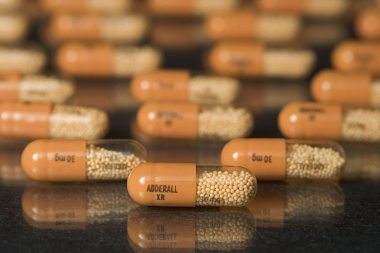
There was also another interesting article on page 69, where it is noted that the shortage of the neuro stimulant drug Adderall (which by the way is banned in several countries because it is  highly addictive), may be associated with a drop in productivity in the United States https://www.economist.com/finance-and-economics/2023/05/25/what-performance-enhancing-stimulants-mean-for-economic-growth

An explanatory hypothesis could be the high pressure from employers in that country, which last year had already merited another article in the same The Economist (June 8th edition), due to the fact that they even "advised" employees to take psychedelic drugs to boost creativity https://19-pacheco-torgal-19.blogspot.com/2022/06/os-patroes-que-aconselham-os-empregados.html

Scopus (2013-2022) - Os livros mais citados, com afiliação Portuguesa, por áreas


Na sequência do post acima, sobre os livros mais citados de sempre,  listam-se abaixo os três livros mais citados, com afiliação Portuguesa, por áreas, que foram produzidos no decénio 2013-2022.  Só foram analisadas as áreas com pelo menos 90 livros indexados

Engineering:

- Visible light communications: Theory and applications (UAveiro)
- An Introduction to Graphene Plasmonics (UMinho)
- Fundamentals of 5G Mobile Networks (UAveiro)
 
Social Sciences:
- New insights into language anxiety: Theory, research and educational implications (Pol Leiria)
- Youth transitions, international student mobility and spatial reflexivity: Being mobile?   (ISCTE)
- Participatory Research for Health and Social Well-Being (UNova)
 
Economics, Business, Management and Accounting:
- Transdisciplinary perspectives on complex systems: New findings and approaches  (U.Minho)
- Handbook on the entrepreneurial university (U.Católica)
- Data mining with R: Learning with case studies (UPorto)
 
Arts and Humanities:
- Emotive language in argumentation (UNova)
- Looking for Mary Magdalene: Alternative Pilgrimage and Ritual Creativity at Catholic Shrines in France (ULisboa)
- The semiperiphery of academic writing: Discourses, communities and practices (ULisboa)
 
Computer Science:
Data mining with R: Learning with case studies (UPorto)
- Engineering computation of structures: The finite element method (UCoimbra)
- Industrial Agents: Emerging Applications of Software Agents in Industry (Pol. Bragança)
 
Medicine
- Participatory Research for Health and Social Well-Being (U.Nova)
- Aquaporins in health and disease: New molecular targets for drug discovery (ULisboa)
- Multi-modality atherosclerosis imaging and diagnosis (ULisboa)

Materials Science
- Handbook of Alkali-Activated Cements, Mortars and Concretes (UMinho)
- Handbook of Adhesion Technology (UPorto)
- Handbook of Recycled Concrete and Demolition Waste (UMinho)

Já a informação sobre os 3 livros mais citados, entre todos os livros indexados na Scopus (1196), com afiliação Portuguesa, de todas as áreas, inclusive daquelas que não produziram 90 livros no decénio 2013-2022,  pode encontrar-se abaixo:

1º lugar absoluto- Visible light communications: Theory and applications (UAveiro)
2º lugar absoluto- An Introduction to Graphene Plasmonics (UMinho)
3º lugar absoluto - Handbook of Alkali-Activated Cements, Mortars and Concretes (UMinho)